
"historical development"
1000 article(s) found

An introduction to the Cultural and Historical reasons of American Coffee to understand the Cultural History of Coffee
Although Americans are world-famous for their coffee, the average amount of coffee they drink each year is less than half that of 1946, indicating that there is still a lot of room for expansion in the American coffee market. With coffee consumption on the rise again, the numbers suggest that despite appearance, the market is far from saturated, an

Coffee culture is full of every moment of life in China's "coffee culture".
According to historical records, coffee was first planted in Taiwan in 1884, which opened the prelude to the development of coffee in China. The earliest coffee cultivation in mainland China began in Yunnan, when a French missionary brought the first coffee seedlings to Binchuan County in Yunnan Province at the beginning of the 20th century. In the following nearly a hundred years, coffee was only planted in the vast territory of China. However, in recent years

When was coffee introduced into China?
Coffee enters China according to historical records, coffee was first planted in Taiwan in 1884, which opened the prelude to the development of coffee in China. The earliest coffee cultivation in the mainland began in Yunnan, when a French missionary brought the first coffee seedlings to Binchuan County in Yunnan Province at the beginning of the 20th century. In the following nearly a hundred years, coffee was only planted in the vast territory of China.

An introduction to the Historical Origin of espresso in China
The history of espresso espresso is at its peak in all coffee-making methods. It maximizes the aroma of coffee, leaving excess acid, caffeine, and so on, which are done by pressurization. However, outside Italy, there has never been a standard to examine this approach. The whole world knows to buy these wonderful machines.

The 6th Science and Technology Cafe in Changzhou in 2017-- an interpretation of the Ancient Bridge Culture of Changzhou's Historical and Cultural Heritage
According to the requirements of the Party work Committee Reading Festival of municipal organs, and combined with the theme of 4.23 World Reading Day, in order to cooperate with the Party branch of the Municipal Association for Science and Technology to carry out unified Party Day activities, guide the broad masses of scientific and technological workers to study more, study hard, and be good at thinking, transmit the positive energy of positive progress. On the evening of April 10, Changzhou Science and Technology Association was in the M113 lecture hall, Houde Building, Changzhou Campus of Hehai University.

A detailed explanation of the Historical Origin and Operation of Coffee in Vietnam
Vietnam was once a French colony, and coffee was brought to Vietnam by French Jesuit missionaries around 1860. In nearly 150 years of history, Vietnam has gradually developed its own unique coffee culture. Coffee exports rank second in the world, but most of them are Robusta beans. The coffee brewing method chosen by the Vietnamese is also specially filtered by Vietnamese pots. In Europe and the United States

A brief History of the Development of Panamanian Coffee A brief History of the Development of Panamanian Coffee
A brief history of the development of coffee in Panama: according to historical data, coffee was first brought to Panama by European immigrants in the 19th century. In the past, Panamanian coffee did not have a good reputation, and its output was only 1 / 10 of that of its neighbor Costa Rica, but now the coffee industry's focus on boutique coffee has made Panama more and more interested in growing coffee. Panama's geographical advantage lies in its

Introduction to the historical varieties of Italian espresso
Espresso Italian espresso (Cappuccino) making and boiling A real espresso consists of 1/3 coffee (an espresso), 1/3 hot milk and 1/3 milk foam (half espresso and half hot milk in the cup). Milk foaming Note: be sure to use cold milk, hot milk is difficult

A century-old traditional Chinese medicine shop has changed into a coffee shop to continue the old feelings from the Baizi cabinet.
In the downtown area, many buildings with historical and cultural characteristics are no match for the great wheel of the times. The Kowloon City District is full of old buildings, and in order to tie in with urban renewal, new and old buildings and culture can also co-exist. With a history of more than half a century, "Dahetang antler Medicine Company" has become a symbol of the area. Seeing the closure of the old historical shop, Shi Junkeng (Henry), a post-80s generation, decided to rent the shop and renovate it into a "Dahe Hall Coffee Shop"
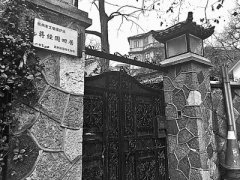
Is it appropriate for Chiang Ching-kuo's former residence to become a coffee shop and celebrity former residence for commercial use?
The former residence of Chiang Ching-kuo, located on the bank of the West Lake in Hangzhou, has attracted attention because it may be converted into a cafe. A few days ago, a public announcement appeared on the official website of the Management Committee of the West Lake Scenic spot in Hangzhou City, Zhejiang Province, triggering a heated discussion in society. The focus of the dispute is that the site of the new project of the popular Cafe mentioned in the public announcement is actually the former residence of Jiang Jingguo, a cultural relic protection site in Hangzhou.

Introduction to the History of how Coffee spread to the World
According to historical records, coffee was first planted in Taiwan in 1884, which opened the prelude to the development of coffee in China. The earliest coffee cultivation in the mainland began in Yunnan, when a French missionary brought the first coffee seedlings to Binchuan County in Yunnan Province at the beginning of the 20th century. In the following nearly a hundred years, coffee was only planted in the vast territory of China. Of course

Basic knowledge of European Historical Fine Coffee on the Coffee Table
If the origin of coffee can be traced back to ancient African and Arab cultures, then the cafe people remember today is a pure European culture. more accurately, it is even a cradle and historical witness of modern European civilization. When coffee came from its hometown of Ethiopia in Africa in the 17th century, it passed through Yemen and dominated the Arabian Peninsula and the Middle East.

Coffee pot in the world-the historical story of coffee bean cultivation in Brazil accounts for 1/3 of the world coffee bean output.
What do you think of when you hear about the South American country of Brazil? Some people will think of Carnival, its celebratory atmosphere, noisy fun and bright colors. Others think of the Amazon rainforest, which is 60% in Brazil. And I thought of coffee. As we all know, coffee is one of the most important industries in Brazil, which is why Brazil is called the world coffee pot.

Piedra de Candela Kendra Coffee from four major coffee producing areas in Panama has special historical flavor.
Professional coffee knowledge exchange more coffee bean information please follow the coffee workshop (Wechat official account cafe_style) Panamanian coffee growing area: unique characteristics of fertile soil: volcanic soil is rich in minerals. Its geological structure can filter moisture ideal altitude: coffee grows at an average altitude of 1500 meters above sea level ideal temperature: lowest temperature average 18 degrees Celsius; maximum

Introduction to the Historical Origin of Rosa Coffee Bean
Following Cafe (Wechat official account vdailycom) found that the beautiful cafe opened a small shop of its own, Geisha, which was found in the rose forest of Ethiopia in 1931 and sent to the Coffee Research Institute in Kenya; it was introduced to Uganda and Tanzania in 1936, Costa Rica in 1953, and Panama by Francesca of Dongba Seven Farm Garden in the 1970s.

The spread History of Coffee in China introduction to the characteristics of Flavor and Taste of Coffee Bean cultivation in Yunnan
According to historical records, Taiwan's planting was successful for the first time in 1884. Since then, coffee trees have been planted in China, and coffee cultivation in mainland China began in Yunnan. In 1902, a French missionary named Tian introduced seeds from Yinggong and planted them in Binchuan County, Yunnan Province. it is located in a place called Zhu Kula, which is located on the bank of the Yushan River, a tributary of the Jinsha River

Historical Story of Xinglong Coffee A brief introduction to the History and Culture of Xinglong Coffee in Hainan
Professional coffee knowledge exchange more coffee bean information Please follow the coffee workshop (Wechat official account cafe_style) in 1960, Premier Zhou visited Xinglong Coffee Garden in 1960. Next to the company of the ancient village of Xinglong Farm in Wanning City, there is a stone tablet telling the story of the affable Premier Zhou Enlai's bond with the fragrant Xinglong Coffee. Originally, coffee would not be with Xinglong.

What are the famous brands of tea in Taiwan? a brief introduction to the historical story of Taiwan tea culture.
As early as the 17th century, two wild native tea subspecies, Taiwan Camellia and Hongya Camellia, were discovered in Taiwan. However, because of their bitter taste and thin, crisp leaves, they have little economic value and are not widely used. More than 200 years ago, Chinese mainland some tea trees from Fujian Province were shipped to Taiwan. This is the beginning of Taiwan's tea culture. During the Qing Dynasty, different tea varieties came from Fujian

The year in which Iced Black Tea appeared and the historical story Iced Black Tea's recipe guide to how to make it delicious.
According to the United States Department of Agriculture, Americans consume more than 2.2 billion gallons of tea a year, of which about 80 per cent (about 1.75 billion gallons) is iced tea. This is nearly 6.5 gallons of iced tea per person! Iced "sweet tea" has been consumed in the south for more than 100 years, but with the rise of fast food restaurants (

Coffee Culture and the Development of Coffee in the Historical World
Europeans first came into contact with coffee around 1515-1519, but were not interested in it for a long time. In 1585, 30 years after the emergence of cafes in Istanbul, the Vatican envoy Morosini reported that these people were all humble, tacky and unenterprising, just wasting their time all day. So, they just sit around all the time